
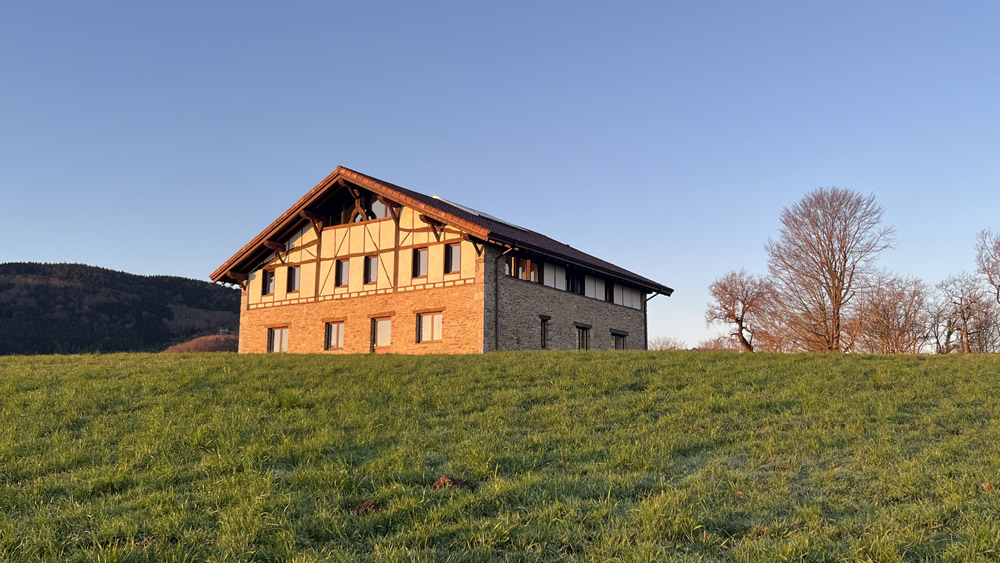
Bizkar represents the rebirth of a farmhouse that aspires to continue witnessing the passage of time and to sculpt the landscape of Gipuzkoa with its presence. The Historical Heritage record of the Provincial Council of Gipuzkoa states that “the farmhouse is situated atop a broad hill just above Laurgain, from where it enjoys one of the most beautiful panoramic views in all of Gipuzkoa.” The same record notes that, “despite not being the ideal location for an old farmhouse due to the lack of water in the vicinity, its position atop a hill—as indicated by the etymology of the place name—makes it one of the farmhouses with the best panoramic views in Gipuzkoa.”
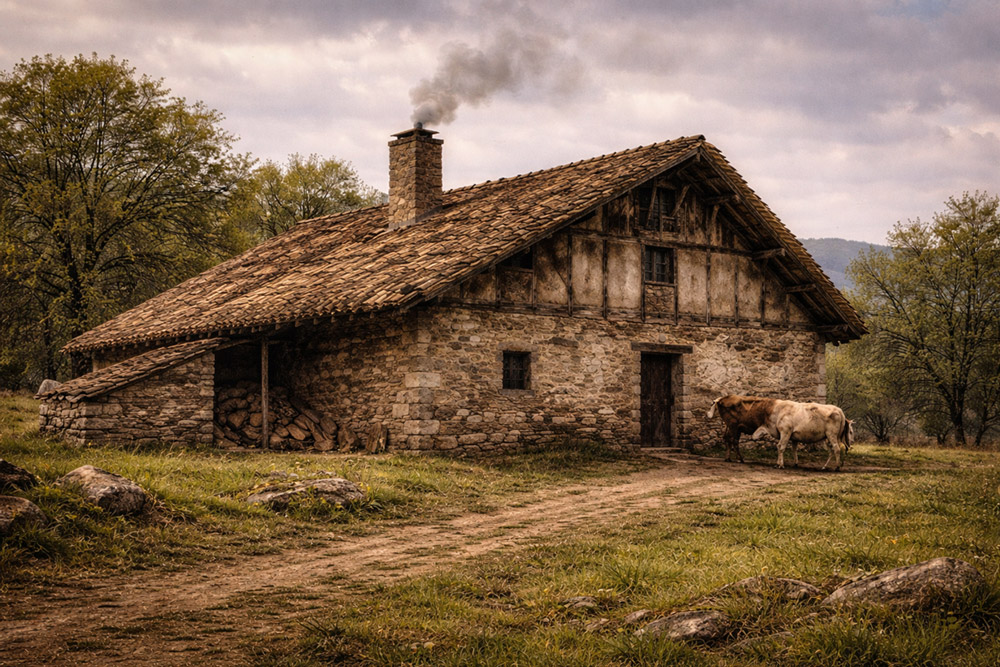
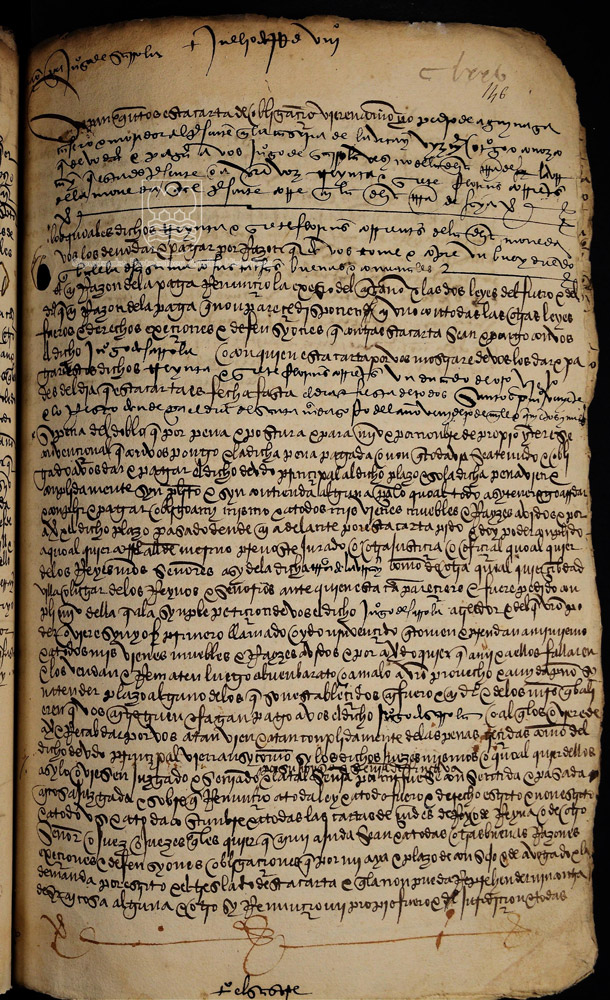
According to the study commissioned from the Aranzadi Science Society, the origin of the farmhouse dates to the second half of the 15th century. In 1508, Pedro Aguinaga, tenant of the farmhouse “Laurcayn Vyzcar,” committed to paying 37 florins to a neighbor from whom he had recently purchased an ox.
This fact confirms the existence of a building already erected and in full operation at the beginning of the 16th century, which places its construction approximately in the second half of the 15th century. This origin is corroborated by recent archaeological studies on Basque farmhouses, which place the construction of the first preserved examples in the first half of that century.
The name “Laurcayn Vyzcar,” which endured well into the 20th century, became integrated into the agricultural and industrial complex dependent on the nearby Laurgain Palace, home of the Lardizabal family, one of the most influential lineages in the Lower Urola region.
In 1533 the farmhouse became part of the Laurgain Entail, along with other farmhouses—Reizta, Gaztañadizabal, Sarrola, Tolare, Iturraran, Sagastizabal, Mindi, Orbelaun, and Iriondo—as well as mills and ironworks such as Agorregi.
Bizkar was then leased for 140 gold ducats annually. Years later, in 1770, the tenant had to pay 2 ducats in currency and, in kind, 18 bushels of wheat, 7 of corn, 2 sheep, 2 lambs, 12 pounds of cheese, 2 cottage cheeses, 2 capons, 2 hens, one cart of straw, one cart of firewood or manure, and 110 pounds of bacon, in addition to six days of labor in service to the Laurgain Palace.
Among the most interesting historical testimonies linked to this place is a document identified by Aranzadi that records the sale and purchase of an ox in the year 1508. Although it is a text related to a routine transaction of the time, its historical value goes far beyond the commercial content itself.
In the second line of the photographed document appears the designation “Laurcain Vizcar”, a reference of great interest because it constitutes one of the oldest known mentions of this name. Thanks to findings like this, it is possible to trace the historical evolution of the place name and better understand the relationship between the present territory and its past.
The photograph of this text allows one to approach not only an old document, but also a small scene from daily life at the beginning of the 16th century, in which a simple sale and purchase of an ox becomes today a valuable trace of the historical memory of the place.
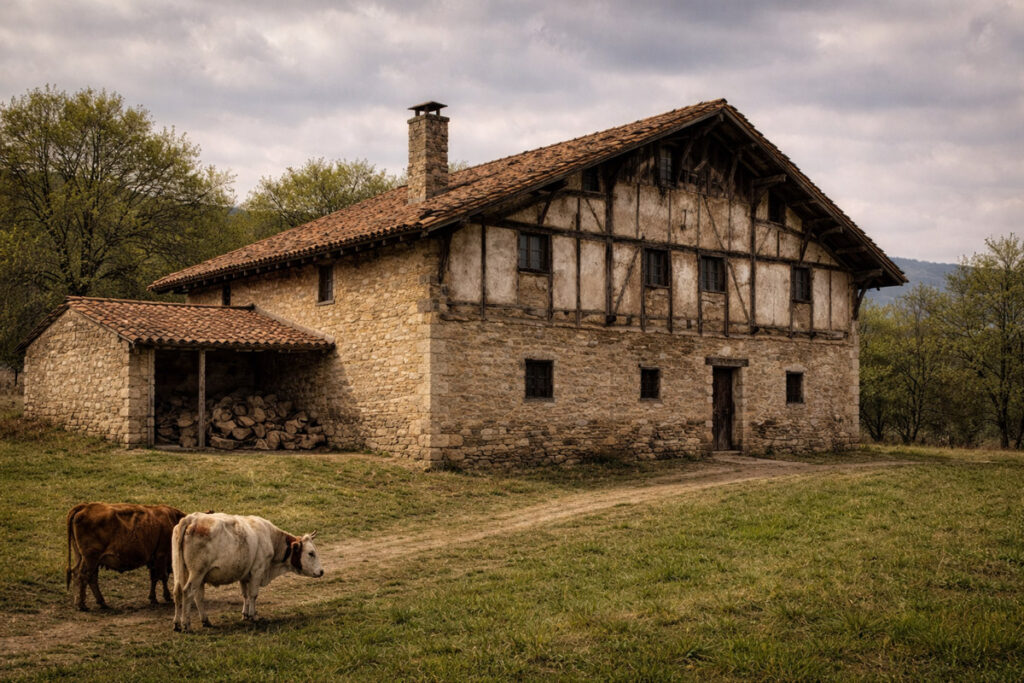
The reconstruction in 1779 probably responded to a destructive episode, possibly a fire, since there is no constructive evidence of the previous building nor is its appearance known with certainty. Therefore, the current appearance, following its rehabilitation in 2024, reflects the characteristics of this 1779 reconstruction.
The dendrochronological study prior to the rehabilitation confirmed that the wood used in the reconstruction comes from trees dated between the late 17th century and the last quarter of the 18th century, specifically between 1686 and 1778, with felling dates between 1758 and 1779.
Historical documentation also shows the participation of tenants from neighboring farmhouses in the 1778 reconstruction. Payments are recorded from the owner, Juan Bautista Amezketa Laurgain—widow of Joaquín Lardizabal—for the transport of materials: 138 reales to the tenant of Sagastizabal for transporting 92 feet of trees and 264 reales to the tenant of Mindi for transporting 24 carts of lime.
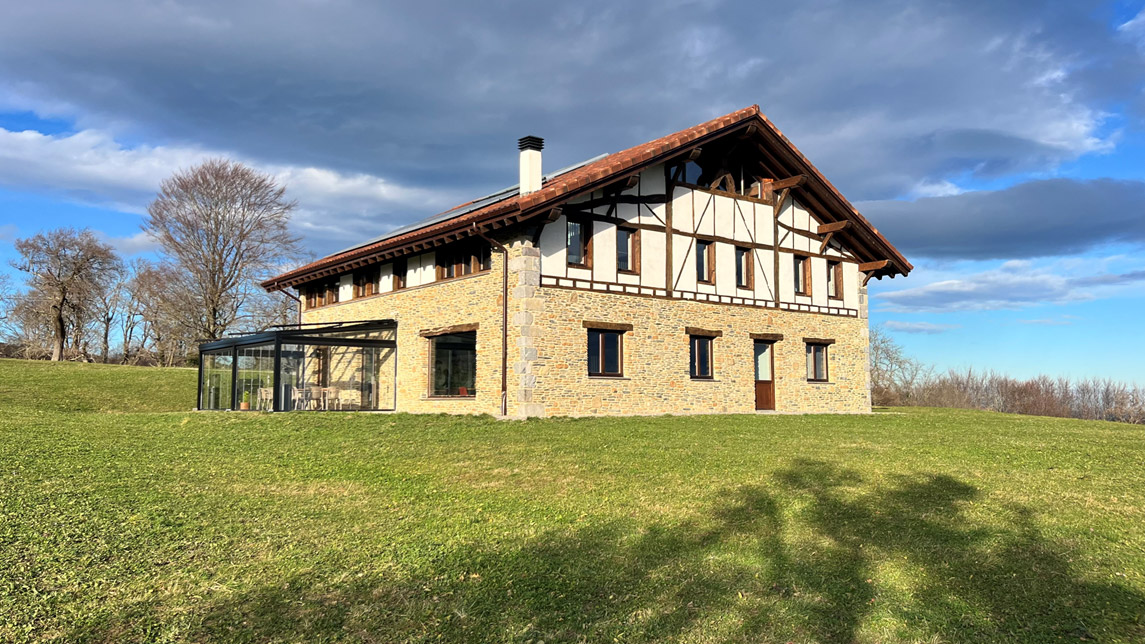
The rehabilitation of Bizkar has preserved its beautiful half-timbered façade and an interior load-bearing structure of simple carpentry, raised on four solid posts set on stone bases, which organize the space into three bays parallel to the ridge and as many orthogonal ones.
Its original style has thus been maintained while comfort and energy efficiency have been modernized through a geothermal system, radiant floor heating, photovoltaic panels, and dual-flow ventilation, which ensure comfort throughout the year.
The intervention has also highlighted the inverted natural fork that supports the ridge beam, a solid oak piece where the date of a major renovation of the farmhouse remains engraved: 1779.